
Before You Improve Dribbling, Read This 3-Drill Breakdown
Ball-handling improves fastest when players combine control, speed, vision, and pressure rather than endlessly repeating stationary crossovers. The most useful starting point is a three-part progression: fingertip control, movement changes, and live decision-making. Players can use a basketball, cones, and 20–30 minutes per session, training three to five days weekly. Beginners should first master the pound dribble, crossover, between-the-legs move, and retreat dribble with both hands. Intermediate players should add full-court cone changes, hesitation moves, and contact pressure. Advanced players should connect each move to a pass, shot, or drive, because impressive dribbling that produces no advantage is mostly decorative noise. The National Basketball Association highlights spacing, pace, and decision-making as central offensive skills, while USA Basketball emphasizes keeping the ball protected and using changes of speed. Start with slow, technically clean repetitions, then increase speed only when your eyes can stay up and your posture remains balanced.
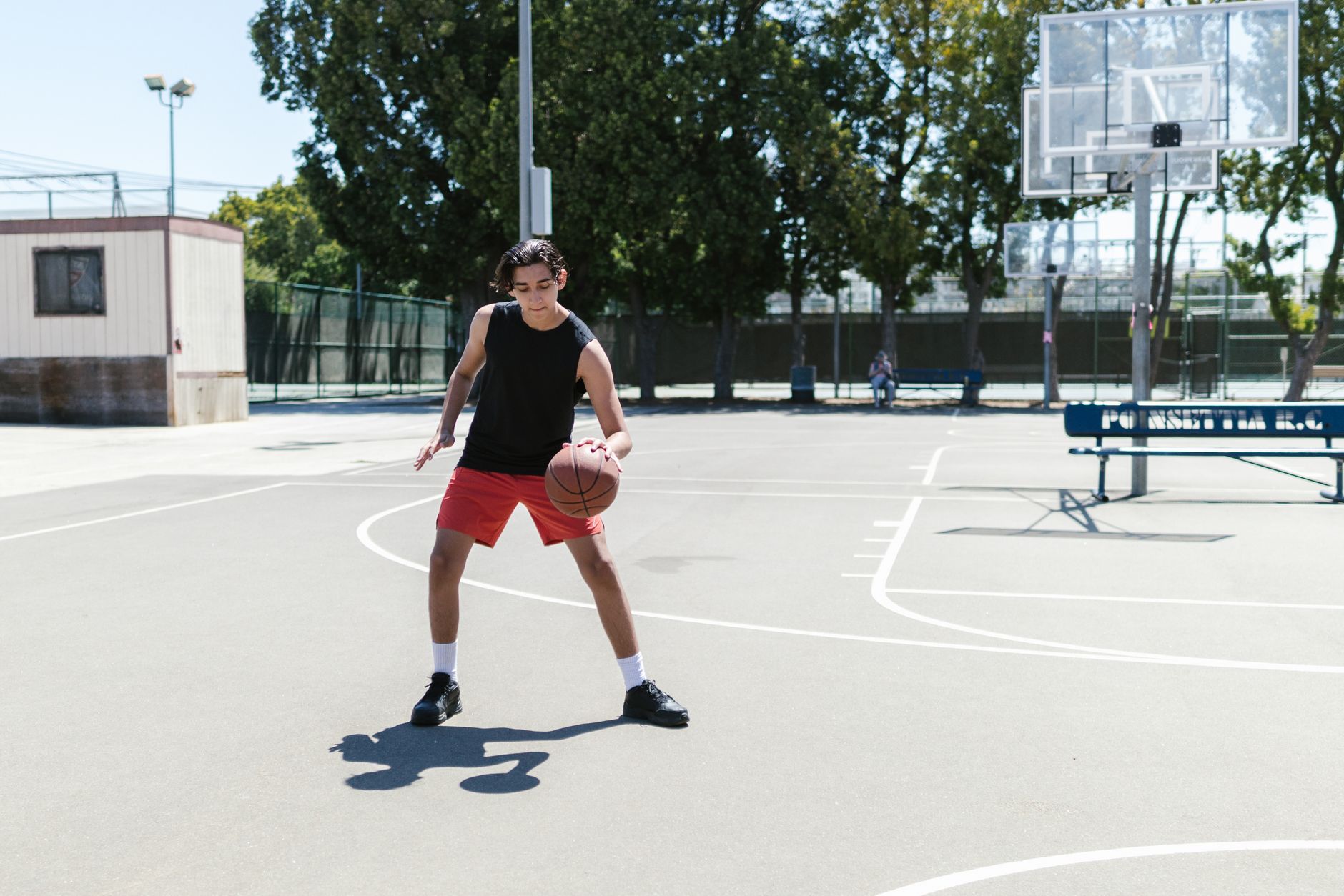
Photo by RDNE Stock project on Pexels
Dribbling is not a talent switch that flips after watching one “secret” tutorial, unfortunately. It is a coordination skill built through deliberate repetition, feedback, and increasingly realistic pressure. A useful session should include roughly 5 minutes of warm-up control, 10 minutes of movement drills, 10 minutes of reactive work, and a short finishing block. If your left hand feels like it was issued by a different manufacturer, train it first rather than hiding it behind your back like evidence. For broader fundamentals, review our [Internal Link: beginner basketball training guide] and track successful repetitions instead of merely counting minutes. Pitch Notes can also help fans connect individual skills with the tactics seen in the 2026 FIFA World Cup, although basketball and football remain gloriously different sports.
Want a clearer training framework? Start with the practical resources here.
The Top 3 Dribbling Priorities at a Glance
The three highest-value priorities are control, change of direction, and game transfer. Control lets you dribble without staring at the ball; change of direction creates separation from a defender; game transfer teaches you when to use a move and when to stop showing off. This ranking is intentionally practical rather than glamorous, because the defender does not award bonus points for a particularly theatrical between-the-legs sequence.
- Control and posture: Build a stable base, strong wrist action, and an ability to keep your eyes up.
- Change of pace and direction: Use crossovers, hesitations, retreats, and angles to create space.
- Pressure and decision-making: Practice against cones, time limits, defenders, and realistic finishing choices.
A 2024 review of motor-learning research published through PubMed supports the value of variable practice: athletes generally benefit from practicing skills in changing conditions rather than repeating one identical movement forever. That does not mean beginners should sprint into chaos on day one. It means your practice should gradually become less predictable. Use 30-second work intervals, 20-second rests, and three rounds per drill, then record whether you lost control, traveled, or made the correct next decision. Numbers are less exciting than a mixtape, but they are much harder to lie to.
#1 Control: What Builds a Reliable Dribble?
Reliable dribbling begins with fingertip control, a low athletic stance, and the ability to protect the ball while scanning the court. Spend 5–8 minutes on stationary pound dribbles, crossovers, V-dribbles, and alternating-height control before adding speed or defensive pressure. The key test is simple: can you maintain control with either hand while looking toward a teammate or the rim?
Start with the following sequence:
- Right-hand pound dribbles for 30 seconds.
- Left-hand pound dribbles for 30 seconds.
- Front V-dribbles for 30 seconds.
- Side V-dribbles for 30 seconds per hand.
- Low crossovers for 30 seconds.
- High-to-low changeovers for 30 seconds.
Keep your chest slightly forward, knees bent, and dribble outside your knee rather than directly beneath your body. The ball should return to your hand through your fingertips, not by slapping it with a flat palm. According to USA Basketball, fundamental skill development includes balance, body control, and the ability to perform under changing conditions. A useful information-gain test is the “eyes-up count”: during a 60-second drill, count how many times you look down. Reduce that number each week while keeping turnovers below two. If your technique collapses, lower the speed before raising it again; ambition is admirable, but the floor remains undefeated.
Photo by Kampus Production on Pexels
Want to build dependable control before adding advanced moves? Use a structured practice reference.
#2 Change of Direction: How Do You Create Separation?
Change of direction creates separation when the dribble, footwork, shoulders, and pace all sell the same intention. The crossover is not effective because the ball travels quickly; it works when the defender believes you are attacking one side before you redirect. Practice each move from a walking start, then jogging speed, then a live approach against a cone or partner. Your first objective is not maximum speed but a convincing setup.
Use this progression for 15–20 minutes:
- Crossover: Attack the defender’s outside shoulder, lower your hips, and push the ball across your body.
- Between the legs: Plant the outside foot, transfer the ball under the front leg, and explode away.
- Behind the back: Use it when the defender reaches or cuts off the front path; keep the ball close.
- Hesitation: Rise slightly, slow your shoulders, then reaccelerate without standing upright.
- Retreat dribble: Create space when the drive is blocked, then re-attack at a new angle.
A contrarian but useful finding from coaching practice is that slower setup repetitions often produce faster game moves. In 20 attempts, perform the first five at 50 percent speed, the next five at 70 percent, and the final ten at game pace. Record whether your lead foot remains under control and whether the ball stays below waist height during the change. Players frequently chase “fast hands” while ignoring slow feet, which is rather like installing a race-car engine on a shopping trolley. For advanced footwork, consult our [Internal Link: crossover and hesitation move guide].
#3 Pressure Training: What Is the Best Value for Game Transfer?
Pressure training offers the best value because it connects technical dribbling to actual decisions without requiring expensive equipment. A basketball, three cones, a wall or partner, and a timer are enough to create meaningful constraints. Begin with cone routes, then add a defender, a time limit, a required finishing action, or a weak-hand restriction. The closer the drill resembles a real possession, the more likely the skill will appear in a game.
Try this 12-minute circuit:
- Full-court cone attack: Place four cones at changing angles and perform a move at each one.
- Two-move rule: Use no more than two dribbles before a shot or pass.
- Random-call drill: A partner calls “crossover,” “retreat,” or “between” as you approach.
- Contact finish: Use a pad or controlled shoulder contact before finishing at the rim.
- Five-second escape: Start near the sideline and escape pressure within five seconds.
Track three outcomes: clean escapes, lost balls, and correct decisions. An important edge case is fatigue. Many players test their handles fresh, then discover during the fourth quarter that their “elite” crossover has quietly become a consent form for a steal. Add one pressure round after conditioning, but keep contact controlled and prioritize safety. The National Basketball Association frequently illustrates how elite guards combine dribbling with spacing, passing, and timing; copying the move without copying the decision is only half the lesson.
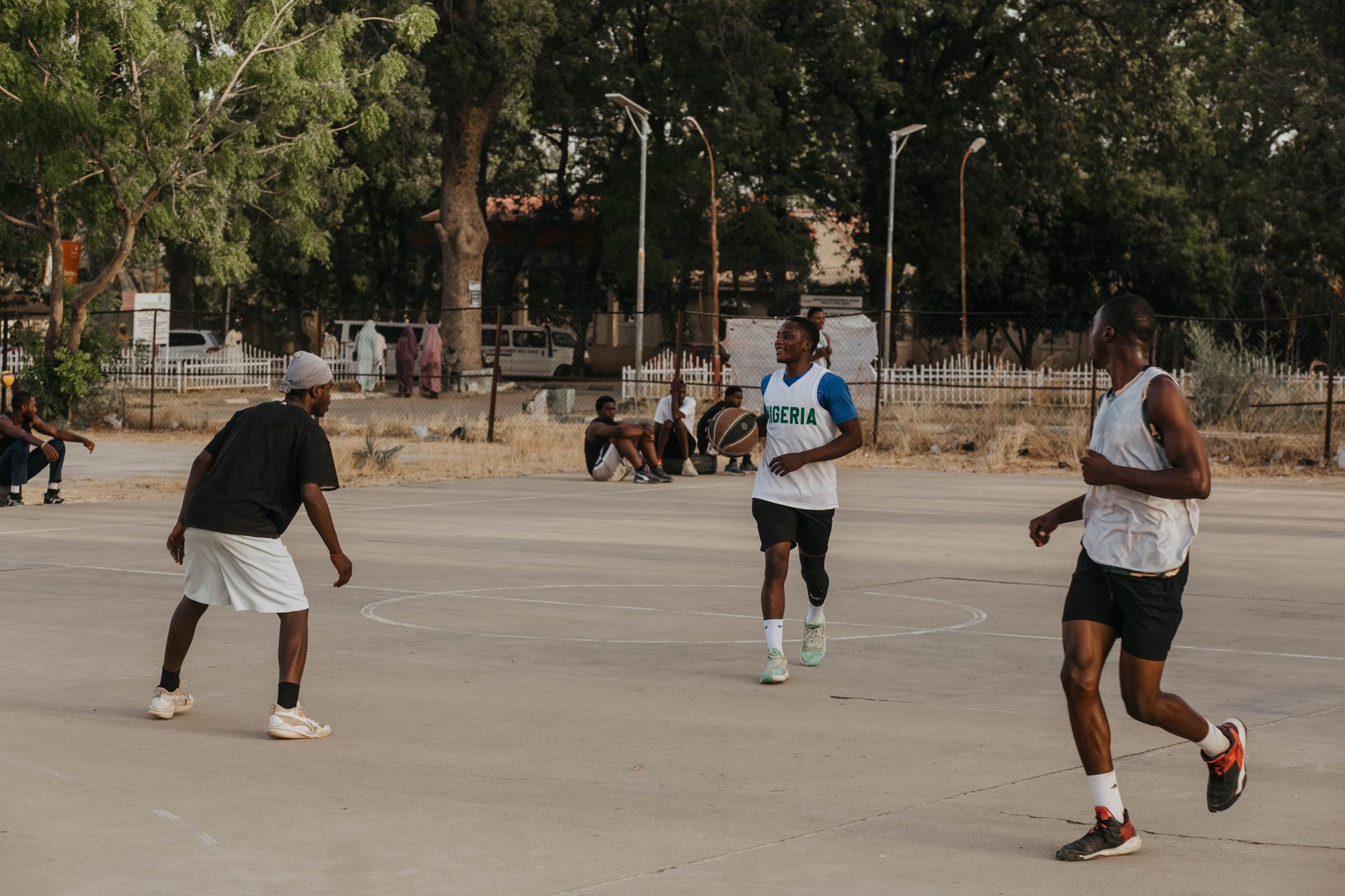
Photo by Darkside Photography on Pexels
Ready to connect dribbling technique with smarter game decisions? Explore the wider analysis from Pitch Notes.
How We Ranked These Dribbling Methods
The ranking weighs transfer to live play more heavily than visual complexity. A drill that looks spectacular but never improves your ability to protect the ball, beat pressure, or make a decision should not outrank a boring drill that works. I learned this cautiously after once trusting a “guaranteed handles” program from a suspicious website and receiving, essentially, three blurry videos and an invoice. Please do not repeat my financial and athletic archaeology.
The ranking uses these criteria:
- Game transfer: 35% — Does the drill improve decisions under realistic pressure?
- Ball control: 25% — Can the player maintain possession with both hands?
- Footwork and balance: 20% — Does the movement support acceleration and stopping?
- Progressive difficulty: 10% — Can beginners and advanced players scale it?
- Equipment access: 10% — Can most athletes practice it affordably?
A strong weekly plan includes two technical sessions, two movement sessions, and one pressure session, with at least one recovery day. Beginners can use 20-minute sessions, while experienced players may train for 30–45 minutes if quality remains high. “More” is not automatically “better”; sloppy repetitions teach sloppy habits with impressive efficiency. Use video from a phone positioned at waist height, review five possessions, and identify one technical correction rather than attempting to repair your entire personality in a single afternoon.
Which Dribbling Plan Should You Pick?
Choose a control-first plan if you are a beginner, a separation plan if you already protect the ball, and a pressure plan if your practice moves disappear during games. Most players should combine all three, but the proportions should reflect their main weakness. A sensible four-week cycle gives each stage a clear purpose while preventing the common mistake of changing drills every day before any adaptation has time to occur.
Week-by-week structure
- Week 1: Stationary control, posture, weak-hand work, and eyes-up practice.
- Week 2: Walking and jogging crossovers, between-the-legs moves, and retreat dribbles.
- Week 3: Cone attacks, hesitation moves, finishing angles, and timed escapes.
- Week 4: Live pressure, two-move possessions, fatigue rounds, and video review.
Measure progress with practical tests: 60 seconds of left-hand control, 10 clean cone attacks, five successful pressure escapes, and a reduction in unnecessary turnovers during scrimmage. If your handle improves but your decisions worsen, slow down and simplify. Great dribblers do not dribble constantly; Stephen Curry, Kyrie Irving, and Arike Ogunbowale use the dribble to manipulate defenders, create passing windows, and reach efficient scoring positions. The ball is a tool, not a pet that must be entertained every possession.
For additional ideas, see our [Internal Link: advanced ball-handling techniques] and [Internal Link: basketball practice planner].
Frequently Asked Questions
Q: What does improving dribbling actually mean?
A: Improving dribbling means controlling the ball with both hands while maintaining balance, vision, pace, and decision-making under pressure. It is not simply performing more complicated moves or dribbling faster in place. A useful benchmark is completing 60 seconds of eyes-up control, 10 clean cone attacks, and several live possessions without unnecessary turnovers. Progress should be measured by possession quality and game transfer, not by how dramatic the move looks on video.
Q: How can I improve basketball dribbling at home?
A: You can improve basketball dribbling at home with a ball, a small safe practice area, and 15–20 minutes of structured work. Perform pound dribbles, V-dribbles, crossovers, between-the-legs transfers, and retreat dribbles for 30-second intervals, then rest for 20 seconds. Keep furniture, pets, and innocent family members out of the danger zone, and record one set weekly to check posture, hand position, and eyes-up control.
Q: What is the difference between stationary and moving dribbling drills?
A: Stationary drills develop touch, rhythm, and hand coordination, while moving drills develop footwork, pace, angles, and game transfer. Stationary work is useful during the first 5–8 minutes of practice, especially for beginners or weak-hand training. Moving drills should occupy the larger portion of a complete session because defenders challenge your balance and direction rather than your ability to stand politely in one spot.
Q: Why does my crossover not work in games?
A: Your crossover may fail in games because the setup, footwork, or change of pace does not convince the defender. Practice attacking a cone’s shoulder, lowering your hips, planting under control, and accelerating after the transfer instead of crossing over from a stationary position. Add a partner or random verbal cue once the movement is clean, because predictable repetitions rarely prepare you for a defender who has plans of their own.
Q: How often should I practice dribbling?
A: Practice dribbling three to five times per week for 20–45 minutes, depending on your experience and recovery. Beginners can improve with four 20-minute sessions, while advanced players may use longer sessions containing technical, movement, and pressure blocks. Include at least one lighter or recovery day weekly, and stop a drill when fatigue causes repeated poor posture, uncontrolled contact, or painful movement.
Q: Do I need expensive equipment to improve ball handling?
A: You do not need expensive equipment; a basketball, three or four cones, a timer, and a safe surface are enough for effective training. Shoes with suitable traction and a phone for video feedback can improve consistency, but specialized reaction lights or resistance devices are optional. Equipment cannot replace progressive practice, and no branded gadget can make your left hand stop filing formal complaints without repetitions.
Q: Should I learn advanced dribbling moves first?
A: You should learn advanced dribbling moves only after you can control basic movements with both hands and maintain balance at game speed. Master pound dribbles, crossovers, between-the-legs transfers, hesitation moves, and retreat dribbles before combining them under pressure. Use advanced combinations sparingly in live play, because one reliable move that creates an advantage is more valuable than five decorative moves that produce a turnover.
The most effective way to improve dribbling is to train control first, add changes of pace and direction second, and finish with pressure-based decisions. Use 20–30 minutes per session, practice three to five days weekly, and measure clean outcomes rather than collecting flashy combinations. Review your work on video, correct one weakness at a time, and remember that the goal is not to win a dribbling talent show; it is to protect possession and create an advantage when a defender is actively trying to ruin your afternoon.
Want to keep improving with practical sports analysis and training-focused content? Visit Pitch Notes for more.