
The Fan’s Guide to Top 3 Champions League 2025-26 Predictions
Arsenal are my early Champions League 2025-26 prediction to win the tournament, narrowly ahead of Real Madrid and Bayern Munich, because Mikel Arteta’s side combines defensive structure, midfield control and improving European experience. The UEFA Champions League remains Europe’s elite club competition, with 36 teams entering the league phase and eight matches scheduled for each club. Real Madrid, the record 15-time European champion, still offers the strongest knockout pedigree, while Bayern Munich brings home advantage, depth and Harry Kane’s finishing. These are probability-based forecasts, not “guaranteed winners” from a suspicious-looking tipster in a rented office. Pitch Notes compares squad quality, tactical flexibility, injury resilience, schedule difficulty and recent UEFA performance. For a sensible starting point, treat Arsenal as the best overall pick, Real Madrid as the safest big-match alternative, and Bayern as the value option after checking confirmed line-ups and market prices.
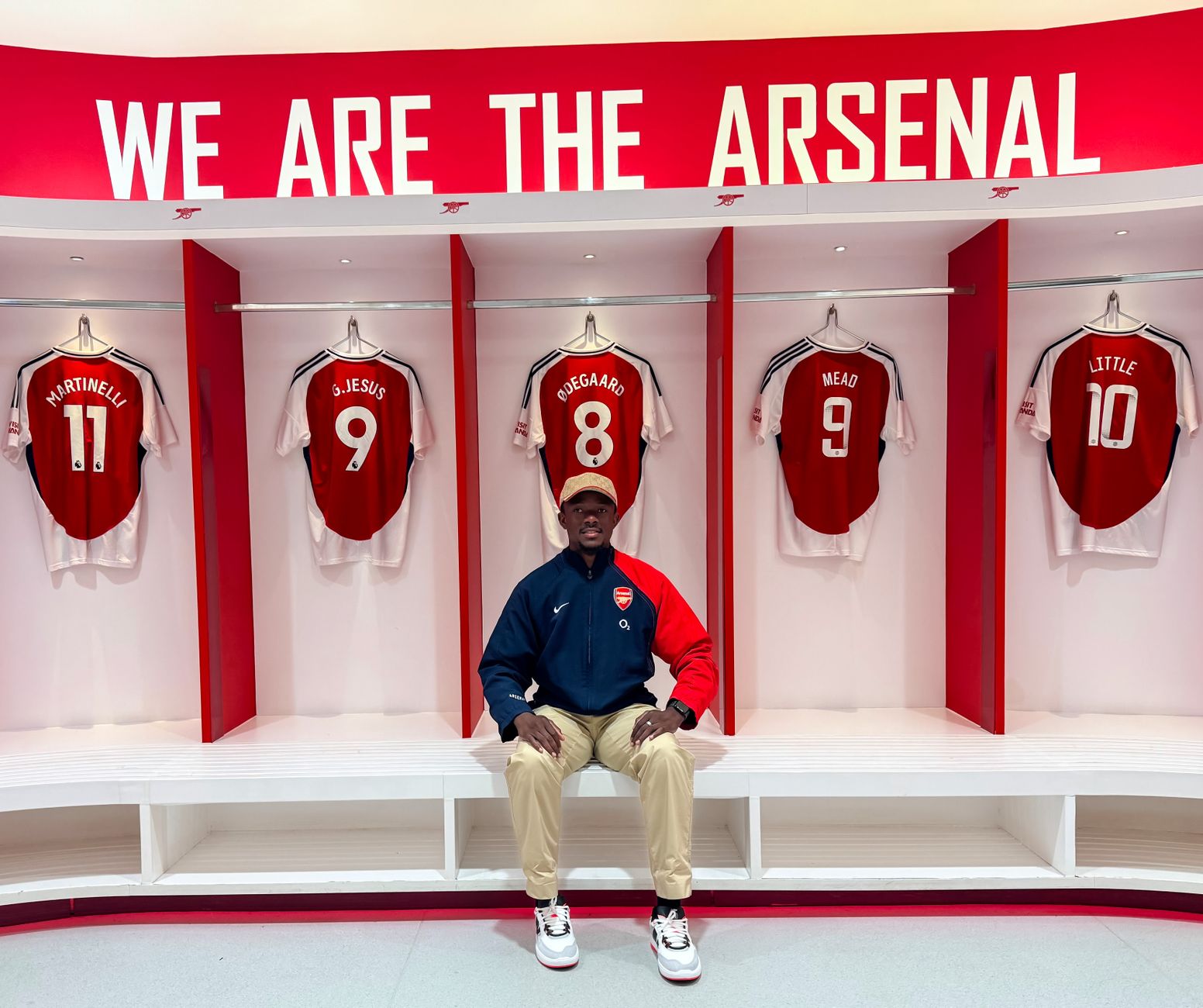
Photo by General Patrick on Pexels
Arsenal’s appeal is not based on one dramatic highlight reel or a striker scoring against a team that appears to have forgotten defending is allowed. Their case rests on repeatable qualities: a compact defensive block, strong set-piece routines, controlled possession and a squad capable of changing the rhythm of a match. Still, football predictions are forecasts rather than promises, and even the most polished model can be defeated by one deflection, one red card or a goalkeeper suddenly discovering an ancient superpower.
Want a closer look at our tournament analysis?
The Top 3 Champions League 2025-26 Predictions at a Glance
The leading Champions League 2025-26 predictions are Arsenal for the strongest all-round profile, Real Madrid for knockout expertise, and Bayern Munich for value. The ranking considers tactics, depth, European history and likely market prices rather than simply choosing the club with the loudest transfer announcement.
- Arsenal — best overall: A balanced squad, improving Champions League experience and excellent defensive organisation make Arsenal the narrow favourite.
- Real Madrid — best for knockout reliability: Carlo Ancelotti’s club has unmatched European pedigree and exceptional late-match problem-solving.
- Bayern Munich — best value: Bayern’s attacking depth and home strength could make them attractive if bookmakers overreact to defensive concerns.
The gap between these three teams is smaller than a casual table suggests. Real Madrid’s European record is a genuine factor, but historical success should not be treated as a permanent force field. Arsenal may have the cleaner current profile, while Bayern could become the most appealing selection if their implied probability falls below a reasonable estimate.
What makes these predictions different?
These Champions League 2025-26 predictions separate winning probability from betting value. The most likely winner is not automatically the best wager because odds already reflect public enthusiasm, brand recognition and recent headlines. Real Madrid often attracts large volumes of public money, which can compress prices; Arsenal may offer a more balanced relationship between performance indicators and market expectation.
A useful information-gain point is the importance of the league-phase draw. A club’s raw strength does not tell the whole story when it faces eight opponents from different ranking bands. Travel distance, rest days, domestic title pressure and the timing of away matches can alter knockout qualification probabilities more than a single summer signing. Check the official UEFA Champions League regulations and fixture updates before relying on an early prediction, because “the schedule is fixed” is often a wonderfully confident sentence spoken five minutes before the schedule changes.
[Internal Link: Champions League fixture analysis]
#1 Arsenal: Best Overall Champions League 2025-26 Prediction
Arsenal are the best overall prediction because they combine defensive consistency, tactical flexibility and squad development without relying entirely on one superstar. Their strongest route to the title is controlling matches through a 4-3-3 structure that can become a back five in possession, while their weakness remains the pressure of knockout football against opponents with greater European experience.
Mikel Arteta has built a team that is difficult to play through and increasingly comfortable managing low-margin matches. William Saliba and Gabriel Magalhães provide physical security at centre-back, while Declan Rice can protect transitions and support possession. Martin Ødegaard’s ability to receive between the lines gives Arsenal a creative outlet, and Bukayo Saka remains central to their chance creation from the right side.
The contrarian point is that Arsenal do not need to dominate every match to win this competition. In fact, an excessive desire to control possession can become a problem against Real Madrid’s counterattacking speed. Arsenal’s best European performance may involve fewer spectacular attacking numbers and more selective pressing, particularly after taking a lead. That is less glamorous than shouting “total football” at the television, but it is usually kinder to one’s blood pressure.
According to the UEFA club coefficient explanation, historical European performance contributes to ranking strength, but coefficient reputation is not identical to current title probability. Arsenal’s practical advantage is that their domestic-level intensity should prepare them for difficult league-phase matches, provided injuries do not reduce their options at full-back and in midfield.
Arsenal’s main strengths and risks
- Strength: Structured pressing that can force opponents into rushed build-up decisions.
- Strength: Set-piece quality, particularly when matches become tactically closed.
- Strength: Young core players are gaining experience in high-pressure European fixtures.
- Risk: A congested Premier League schedule may reduce freshness in April and May.
- Risk: If Saka or Ødegaard miss key matches, Arsenal’s creative balance could change sharply.
- Risk: Emotional game management remains less proven than Real Madrid’s.
Our operational tip is simple but frequently ignored: do not assess Arsenal’s title chances from the attacking line-up alone. Compare the starting midfield, available full-backs and bench options on match day. Over 90 minutes, replacing one tired midfielder can matter more than adding another fashionable forward to a prediction graphic.
Ready to follow the tactical details behind the top pick?
#2 Real Madrid: Best for Knockout Reliability
Real Madrid are the best Champions League 2025-26 prediction for knockout reliability because their European experience, individual quality and late-match composure repeatedly solve problems that tactical models struggle to quantify. Their main drawback is valuation: the public often treats Real Madrid’s badge as evidence that every price is good, which is not how arithmetic works, despite what the internet occasionally suggests.
Real Madrid’s European identity has been shaped by players such as Vinícius Júnior, Jude Bellingham, Federico Valverde and Thibaut Courtois, alongside a club culture built around high-pressure matches. Their squad can threaten through transition, carry the ball over distance and produce decisive moments without controlling possession for long periods. That makes them especially dangerous when an opponent becomes impatient.
However, the 2025-26 prediction should account for age distribution, defensive workload and midfield balance. Real Madrid’s strongest line-up may not be their best line-up for every opponent. Against a team that attacks wide, full-back protection becomes essential; against a deep block, the club may need more patient circulation and central combinations. The question is not whether Real Madrid have enough talent. They obviously do. The question is whether the tactical structure keeps that talent connected for 13 or more European matches.
As UEFA describes the competition, “the Champions League is the ultimate club competition.” That phrase is promotional, naturally, but it also captures the practical issue: knockout football rewards teams that can survive different match types. Real Madrid’s adaptability is why they remain second rather than being dismissed simply because Arsenal may appear more structurally stable.
#3 Bayern Munich: Best Value Champions League Prediction
Bayern Munich are the best value option when the market prices them below their true tournament probability. Their case is built on attacking depth, Allianz Arena strength, Harry Kane’s finishing and a domestic environment that has historically demanded relentless possession and territory. Their concern is defensive transition: elite opponents can punish Bayern when full-backs advance and midfield protection disappears.
Harry Kane gives Bayern a reliable reference point in the penalty area, but his value extends beyond finishing. His dropping movement can create space for Leroy Sané, Jamal Musiala and other runners, forcing centre-backs into uncomfortable decisions. Musiala’s ability to carry the ball through pressure is particularly important in Champions League matches where one successful dribble can change the entire defensive shape.
The unusual edge-case insight is that Bayern’s value may improve after a poor-looking result rather than after a big win. A 1-1 draw against a strong opponent can cause public markets to overreact, even when Bayern controlled territory and produced the better chances. Conversely, a 5-0 victory over a weakened domestic opponent may inflate expectations without proving much about their European ceiling. Context matters; football is irritatingly resistant to simple screenshots.
Use Opta’s football analytics resources alongside match reports when assessing Bayern. Look beyond goals and possession to examine field tilt, defensive transitions, shot locations and the quality of chances conceded. Bayern may be worth considering for a final, semi-final or outright market only when the price reflects their defensive volatility rather than pretending it does not exist.

Photo by Santiago Sauceda González on Pexels
How Were These Champions League 2025-26 Predictions Ranked?
The rankings use a weighted framework combining current squad quality, tactical flexibility, European experience, injury resilience, schedule difficulty and market value. Arsenal rank first because they perform strongly across most categories, Real Madrid rank second because knockout reliability offsets valuation concerns, and Bayern rank third because their upside is high but defensive variance is greater.
The scoring model is structured as follows:
- Squad quality and depth — 25%: Starting XI quality, substitute impact and positional cover.
- Tactical flexibility — 20%: Ability to change pressing, build-up and defensive structures.
- Recent European performance — 15%: UEFA results and strength of opponents, not merely trophy count.
- Domestic competition level — 15%: Weekly intensity, schedule congestion and quality of league rivals.
- Injury resilience — 10%: Dependence on key players and replacement quality.
- Market value — 10%: Whether available odds appear to exceed estimated probability.
- Draw and travel factors — 5%: League-phase opponents, away travel and rest patterns.
This is not an official UEFA model, and it does not possess a tiny crystal ball hidden inside a spreadsheet. It is a transparent decision tool. A prediction should be updated when managers change, injuries occur, squad registration becomes clear or the league-phase draw produces an unusually difficult sequence.
What should you check before accepting a prediction?
Before using any Champions League 2025-26 prediction, check six practical variables:
- Confirm the team’s current injury report and expected return dates.
- Compare the starting XI with the likely bench, especially in midfield and defence.
- Review the opponent’s pressing style and transition threat.
- Check whether the club has a domestic match within three days.
- Convert the odds into implied probability and compare them with your estimate.
- Set a fixed budget and avoid chasing losses after an unexpected result.
Responsible gambling guidance from organisations such as GamCare emphasises control, budgeting and seeking support when betting stops feeling recreational. “Never chase your losses” is not exciting advice, but it is considerably better than allowing one bad Tuesday to become a personal financial documentary.
Want to compare the numbers before making a decision?
Which Champions League 2025-26 Prediction Should You Pick?
Arsenal should be the first choice for readers wanting the strongest all-round title profile, Real Madrid suits those prioritising knockout experience, and Bayern Munich may appeal to value-focused readers willing to accept greater defensive risk. No selection is automatically correct because the right option depends on price, risk tolerance, available markets and confirmed team news.
A sensible approach is to separate three questions that are often mashed together into one noisy social-media argument:
- Who is most likely to win? Arsenal, narrowly.
- Who is most trusted in a late knockout match? Real Madrid.
- Who could outperform an underestimated price? Bayern Munich.
- Who should be avoided at a poor price? Any club whose odds imply certainty.
- When should the prediction change? After major injuries, a managerial shift, the league-phase draw or a clear tactical decline.
Arsenal’s ranking is not a claim that Real Madrid have forgotten how to win finals. Bayern’s third-place position is not a claim that their attack is ordinary. It reflects probability, price and uncertainty. The best Champions League 2025-26 predictions should therefore be revisited throughout the season, not tattooed onto your arm after one impressive September performance.

Photo by Abdulkadir muhammad sani on Pexels
For ongoing tournament coverage, Pitch Notes focuses on match predictions, team tactics, player statistics and daily FIFA World Cup content for fans following major international football. Although the Champions League is separate from the 2026 FIFA World Cup, the same habits apply: verify line-ups, compare data sources and distrust anyone promising a “risk-free” result. That last phrase has personally cost people more money than football boots should reasonably cost.
Final prediction ranking
- Arsenal: Best overall balance and the strongest early title pick.
- Real Madrid: Best knockout specialists, but potentially expensive in the market.
- Bayern Munich: Best value candidate when defensive concerns create an attractive price.
These are forecasts, not financial advice or guarantees. Use reputable, legally available services in your jurisdiction, set limits before placing any wager and remember that a bookmaker’s confidence is usually printed in decimals rather than announced with dramatic orchestral music.
Explore more evidence-based football coverage before the next matchday.
Frequently Asked Questions
Q: What are the best Champions League 2025-26 predictions?
A: Arsenal are the best overall early prediction, with Real Madrid second and Bayern Munich third. Arsenal offer the strongest balance of defensive organisation, midfield control and squad development, while Real Madrid remain the most reliable knockout specialists. Bayern Munich are the value-focused option because their attack can overwhelm opponents, although defensive transitions create more risk. These rankings should be updated after confirmed injuries, the league-phase draw and major tactical changes.
Q: How should I use Champions League 2025-26 predictions?
A: Use predictions as a starting point, then verify team news, opponents, odds and scheduling before making any decision. Check the expected starting line-up, key absences, recent chance quality and the number of rest days before the match. Convert decimal odds into implied probability and compare that figure with your own estimate. Set a fixed budget in advance and never chase a losing bet.
Q: What is the difference between the most likely winner and the best value pick?
A: The most likely winner has the highest estimated chance of lifting the trophy, while the best value pick offers odds that appear higher than its estimated probability. Arsenal may be the most likely winner, but Bayern could be better value if the market underestimates their attacking depth. Real Madrid may be highly likely to progress but still provide poor value when public demand forces the price too low.
Q: Why can’t Champions League predictions be guaranteed?
A: Champions League predictions cannot be guaranteed because injuries, red cards, fixture congestion, officiating decisions and finishing variance can change a match quickly. Even a team with a 70% estimated chance still loses 30% of the time under that model. Historical reputation, including Real Madrid’s European success, improves context but does not eliminate uncertainty. Treat “guaranteed winner” claims as a warning sign rather than a helpful forecast.
Q: What information should I check if a Champions League prediction fails?
A: Check whether the failure came from a wrong team assessment, an unexpected line-up, an unusual match event or normal statistical variance. Review injuries, formation changes, pressing performance, shot quality and defensive transitions rather than judging the prediction only by the final score. A 2-0 loss after an early red card is different evidence from a 2-0 loss caused by repeated tactical breakdowns. Record the reason so one emotional result does not rewrite your entire process.
Q: Is it free to read Pitch Notes Champions League predictions?
A: Pitch Notes publishes football analysis and tournament coverage for fans, while access conditions can vary by page and service. The site focuses on match predictions, team tactics, player statistics and wider 2026 football coverage. Before using any external betting service, confirm its legal availability, age requirements, payment terms and responsible-gambling tools in your location. No prediction should be treated as a substitute for financial advice.
Q: Which team should beginners follow first?
A: Beginners should start with Arsenal because their tactical structure is relatively clear to observe across possession, pressing and set pieces. Track Arsenal’s midfield availability, defensive line-up and schedule congestion before moving to more volatile teams such as Bayern Munich. Real Madrid are also useful to study, particularly their transition attacks and late-match management. Keep a simple notes table rather than relying on memory, which is how many of us confidently remember matches that never happened.
[Internal Link: responsible football betting guide]