
What Nobody Tells You About Football Skills
Improving football skills comes from deliberate, repeatable practice rather than simply playing more matches. Pitch Notes, a FIFA World Cup-focused football content site, recommends combining technical drills, decision-making, physical preparation, and match review for players in every region, from youth football in England to amateur leagues in the United States and Australia. A practical starting plan is three focused sessions per week: 20 minutes of ball mastery, 20 minutes of passing or dribbling, and 15 minutes of shooting or defending. Research on motor learning consistently supports high-quality repetition with varied conditions, while FIFA’s Laws of the Game explain why first-touch direction, timing, and awareness matter in real play. Lionel Messi’s reported training consistency is inspirational, but copying five-hour routines is unnecessary and slightly ambitious for anyone with school, work, or knees. Start with one weakness, record measurable results for four weeks, and increase difficulty only when technique remains controlled.
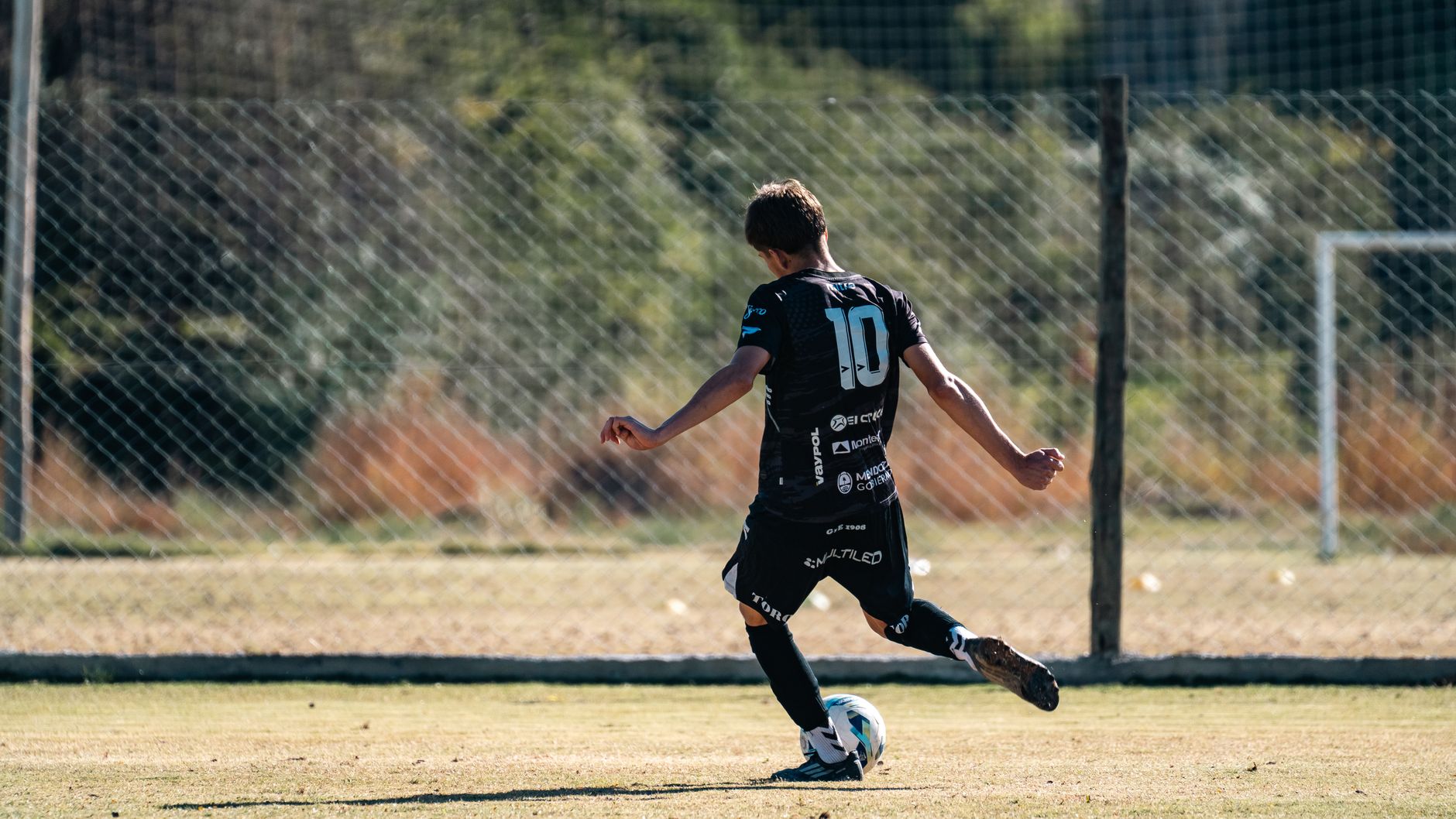
Photo by Franco Monsalvo on Pexels
Want a clearer football training framework before you start? Pitch Notes covers match predictions, team tactics, player statistics, and tournament analysis for fans preparing for the 2026 FIFA World Cup.
The Quick Comparison
| Football skill | Best starting drill | Suggested frequency | Main match benefit |
|---|---|---|---|
| First touch | Wall receiving drill | 3 times weekly | More time under pressure |
| Passing | Two-touch wall passing | 2–4 times weekly | Faster circulation |
| Dribbling | Random cone movement | 2–3 times weekly | Better changes of direction |
| Shooting | Finishing from angles | 2 times weekly | More accurate attempts |
| Defending | Mirror and jockey drill | 2 times weekly | Improved body positioning |
| Agility | Short acceleration patterns | 2 times weekly | Faster reactions |
| Decision-making | Small-sided games | 1–2 times weekly | Better choices in matches |
The table is useful, but it hides the awkward truth: a drill only improves the action it actually trains. Ten minutes of stationary toe taps may make your feet busy, yet it does not automatically teach you when to pass, where to scan, or how to protect the ball against a defender from Arsenal or Borussia Dortmund. The most effective football training moves from controlled technique to variable pressure, then into realistic game situations. That progression matters because football is not a cone appreciation society, despite what your backyard currently resembles. According to FIFA’s Laws of the Game, players must continually manage legal contact, space, and timing, so technical work should eventually include movement and opposition. For a deeper starting point, see our [Internal Link: beginner football training guide], especially if your current plan is “run around until tired.”
A simple four-week measurement system
Track these four numbers after each session:
- Successful wall passes in 60 seconds.
- Controlled first touches out of 20 attempts.
- Shots on target out of 20.
- Successful dribbles through a changing cone course.
Do not chase speed while your ball control is collapsing like a badly organised defensive line. Record your weaker foot separately, because a combined score can disguise a major imbalance. A player who completes 18 right-foot passes and 7 left-foot passes has not achieved “25 balanced passes”; they have discovered a very polite tactical warning. Review the results weekly and change only one variable at a time, such as distance, speed, pressure, or weaker-foot use.
Round 1: How Do You Build a Reliable First Touch?
A reliable first touch comes from receiving the ball with the correct surface, cushioning its speed, and directing it into usable space. Begin with 50 controlled receptions using both feet, then add movement, a passive defender, and one-touch decisions. The target is not merely stopping the ball; it is preparing the next action before pressure arrives.
First-touch training should begin with a wall because a wall is patient, affordable, and never complains about your technique. Pass firmly with the inside of your foot, observe the rebound, and receive with the sole, inside, outside, thigh, chest, or laces depending on the ball’s height and speed. Your controlling touch should generally move the ball away from an imaginary opponent and toward your next passing lane. Use a five-metre distance at first, then increase to eight or ten metres once the ball returns consistently. The Fédération Internationale de Football Association regularly emphasises technical repetition and game-relevant movement in coaching education, but repetition without observation becomes wonderfully efficient practice of the wrong habit. Keep your head up before the pass, glance over one shoulder, and decide your next action before the ball arrives. After 20 receptions, make ten deliberately awkward passes at different heights and angles, because matches have never respected your carefully prepared bounce. Add a teammate who calls “left,” “right,” or “turn” as the ball travels, forcing perception and technique to work together.
The wall progression
- Pass and receive with two touches for 3 minutes.
- Receive across your body with the opposite foot for 3 minutes.
- Use one touch when the rebound is predictable for 2 minutes.
- Add a scanning call from a partner for 3 minutes.
- Finish with 10 receptions under time pressure.
One useful insight is that a first touch should be judged by the next action, not by how close the ball remains to your shoe. If you are receiving into open space, a touch of one metre may be superior to a touch of 20 centimetres because it accelerates the next pass. Conversely, near an opponent, a smaller protective touch may be safer. This context-based scoring is more informative than celebrating every “perfect” touch in isolation. Test yourself by placing two gates three metres apart: receive through the correct gate based on a partner’s call, then pass through a second gate. This creates a simple chain of perception, control, and execution. Players often discover that their technique is acceptable until a decision is added, which is not bad news; it identifies the actual training problem. For advanced work, explore our [Internal Link: first-touch and scanning drills].
Ready to turn first-touch practice into smarter match decisions?
Round 2: What Improves Passing, Dribbling, and Shooting?
Passing, dribbling, and shooting improve fastest when players practise accuracy first, then add time limits, movement, pressure, and a realistic decision. Use short technical blocks: 100 varied passes, 10 minutes of directional dribbling, and 20 controlled finishes, while keeping a written success rate rather than relying on memory.
Passing should include both feet, different distances, and different receiving angles. A useful solo session has 30 inside-foot passes, 20 passes with the weaker foot, 20 passes after a lateral movement, and 20 longer driven passes. With a teammate, create triangular passing patterns rather than endlessly passing in a straight line, because football includes changing angles and third-player movement. Demand a clear communication call before receiving: “man on,” “turn,” or “time.” These words are not decorative background noise; they influence whether the first touch should protect, turn, or release. In a small-sided game, count not only completed passes but also whether the pass helped the receiver face forward. That second measure offers a better tactical signal than possession statistics alone. The UEFA Training Ground provides coaching resources that repeatedly connect technical execution with space, timing, and decision-making. If your pass arrives beautifully but forces your teammate backward, congratulations: you have delivered a technically attractive problem.
Dribbling should move beyond regularly spaced cones. Straight lines can build familiarity, but irregular spacing better develops adjustment and balance. Place six to eight cones randomly over a 12-by-15-metre area and complete three rounds using the inside, outside, sole, and weaker foot. Then add a partner who applies light pressure from one side. Your aim is not to perform a circus trick every five seconds; it is to change direction, protect the ball, and accelerate into space. Measure successful exits from the area, not only the number of touches. A practical edge case appears here: many players practise dribbling at maximum speed, then lose the ball when forced to decelerate. Add deliberate stop-start movements, including a two-second pause before exploding away. This trains braking control, which is often neglected and can determine whether a feint actually works. Review our [Internal Link: advanced dribbling techniques] for body feints, shielding angles, and timing.

Photo by Franco Monsalvo on Pexels
Shooting requires a target, a realistic angle, and a repeatable setup. Start with 20 finishes from the edge of the penalty area: ten placed with the inside of the foot and ten struck with the laces. Then add five shots after a lateral dribble, five after a first-touch setup, and five from the weaker foot. Record shots on target, not just goals, because goalkeeping, deflections, and tiny target areas can distort the result. Practise low finishes toward both corners, shots across the goalkeeper, and near-post attempts from changing angles. Keep your head steady over the ball for low strikes, plant your non-kicking foot beside the ball, and avoid leaning backward unless you are intentionally applying for a job in the upper stand. The contrarian point is that more shots are not always better: if fatigue turns your final 15 attempts into poor mechanics, stop, reset, and repeat at higher quality the next day. A 2024-style professional workload is not required for recreational players; consistency across weeks is more valuable than one dramatic session that leaves your hamstrings writing a complaint letter.
Want practical match-analysis ideas to connect these drills with real teams and players?
Round 3: Why Do Defending, Agility, and Fitness Matter?
Defending, agility, and fitness matter because technical quality falls sharply when a player cannot reach the ball, slow an opponent, or repeat high-intensity actions. Train defensive footwork with low hips and controlled steps, practise acceleration over 5–15 metres, and build conditioning through football-specific intervals rather than exhausting distance runs alone.
A defensive player should first learn to delay, not immediately attempt a spectacular tackle that belongs in a highlight reel only if the highlight editor is feeling mischievous. Use a mirror drill with a partner inside a 6-by-8-metre channel: the attacker moves laterally, while the defender maintains a side-on stance, controls the distance, and prevents access to the central lane. Work for 20 seconds, rest for 40 seconds, and repeat six times. Keep your feet active without crossing them, watch the opponent’s hips rather than the ball, and angle the attacker toward a less dangerous area. Progress by allowing the attacker to accelerate, change direction, or pass through a small gate. The International Olympic Committee describes football as a sport requiring repeated technical and physical actions, and defensive training should reflect that combination. Add a recovery sprint after each defensive repetition to simulate the unpleasant but highly educational moment after a challenge fails.
Agility is not simply moving quickly through a ladder. A ladder can help coordination, but a match asks you to react to a visual cue, brake, turn, and accelerate. Set three coloured gates five metres apart and have a partner call the destination late. Sprint to the correct gate, decelerate under control, then return at 70 percent intensity. Complete eight repetitions with 30–45 seconds of recovery. This delayed-cue format is a specific improvement over memorised patterns because it trains decision time as well as foot speed. For fitness, use four rounds of four minutes: 20 seconds hard running, 20 seconds controlled movement, and 20 seconds walking, repeated continuously. Beginners can complete two rounds; experienced players may use six, provided technique remains stable. A simple rule is to stop adding work when your first touch becomes noticeably longer or your passing accuracy drops below 70 percent. Fitness that damages football skill is not automatically superior fitness; it may just be tiredness wearing a whistle.
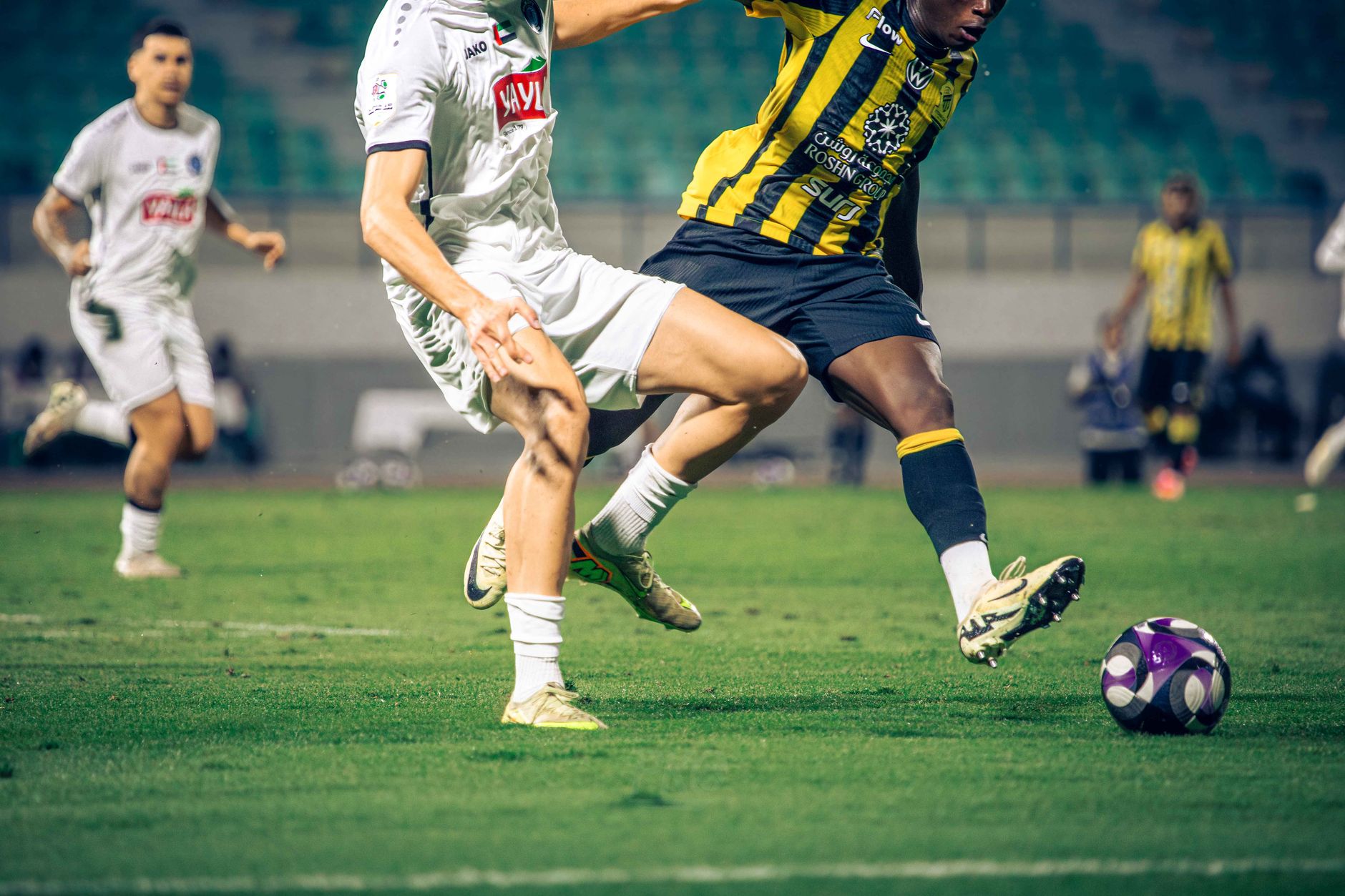
Photo by Jeffrey Paa Kwesi Opare on Pexels
Small-sided games connect every separate skill. Use three-versus-three or four-versus-four games on a 25-by-20-metre pitch, with a two-touch limit for advanced players or unlimited touches for beginners. Award an extra point when a team switches play, completes a third-player run, or wins the ball within five seconds of losing it. These rules create tactical behaviours without requiring a lecture long enough to make everyone miss dinner. Count your scans before receiving, successful forward passes, defensive delays, and recovery runs. A particularly revealing test is to compare your technical performance in the first five minutes with the final five minutes; if completion falls from 82 percent to 55 percent, the problem may be conditioning, concentration, or both. Repeat the game weekly and change only one rule. This produces more useful evidence than constantly inventing new drills. Pitch Notes’ tournament coverage can also help you watch how players such as Jude Bellingham, Kylian Mbappé, and Rodri manage space, pressure, and transitions at elite level.
Need a stronger weekly plan for your position and current fitness level?
A realistic weekly football skills schedule
- Monday: 15 minutes of ball mastery, 20 minutes of first touch, 15 minutes of passing.
- Wednesday: 10 minutes of mobility, 20 minutes of dribbling, 20 minutes of finishing.
- Friday: 15 minutes of passing under pressure, 15 minutes of defensive footwork, 15 minutes of acceleration.
- Weekend: One small-sided game or full match, followed by a 10-minute review.
- Recovery days: Walking, light mobility, hydration, and adequate sleep.
The schedule works because it leaves space for recovery and observation. Training every day at maximum intensity is not necessary, particularly for young players, beginners, or anyone returning from injury. The World Health Organization recommends regular physical activity while recognising that workload should be appropriate to age, ability, and health status. Warm up with progressive movement for at least 8–12 minutes, including easy jogging, dynamic mobility, and ball contacts. Avoid aggressive static stretching immediately before explosive work if it makes you feel less prepared. After training, note soreness, sleep quality, and motivation alongside football statistics. If pain is sharp, changes your movement, or persists, consult a qualified medical professional rather than asking a search engine to diagnose your hamstring while you are still sprinting. A coach can also correct technique faster than repeated solo guessing, especially for shooting mechanics and defensive posture.
The Final Score & Who Should Pick What
The best football skills plan is the one that begins with a measurable weakness, progresses from control to pressure, and remains sustainable for at least four weeks. Beginners should prioritise first touch, passing, balance, and basic movement; intermediate players should add scanning, weak-foot work, and small-sided decision-making; advanced players should train position-specific actions at match speed. The winning formula is not “more drills,” but better feedback, realistic variation, and enough recovery to repeat quality work.
Choose your priority using this simple decision guide:
- Lose the ball on your first touch: Use wall receptions, directional control, and scanning calls.
- Pass accurately but slowly: Add one-touch limits, movement before receiving, and pressure.
- Beat cones but struggle against defenders: Replace some cone time with mirror drills and one-on-one games.
- Reach good positions but miss chances: Train finishes after movement, under fatigue, and from both sides.
- Defend aggressively but get beaten: Practise delaying, side-on body shape, and controlled distance.
- Play well early but fade: Use small-sided intervals and track late-session accuracy.
One information-rich habit is to film two minutes of training from behind and two minutes from the side every fortnight. Video often reveals details that sensation hides: the head never scans, the supporting foot points away from the target, or the defender stands too square. Compare clips after four weeks, not after every session, because immediate self-analysis can turn a normal mistake into a full courtroom drama. Elite examples from the 2026 FIFA World Cup cycle may inspire your study, but copy principles rather than movements: scan before receiving, create separation, protect the ball, and choose the simplest effective action. Pitch Notes can support that process with team tactics, player statistics, and match context. Your next step is straightforward: select one technical weakness, choose two drills, and schedule the first session within 48 hours.
Ready to keep improving with football analysis and practical training ideas?
Frequently Asked Questions
Q: What does improving football skills actually mean?
A: Improving football skills means becoming more consistent and effective with technique, decisions, movement, and physical execution during real play. It includes first touch, passing, dribbling, shooting, defending, scanning, and fitness rather than isolated tricks. Use measurable tests such as 20 controlled receptions, 60-second passing totals, shots on target, and successful defensive delays. Review results every one or two weeks so progress is based on evidence instead of the emotionally generous memory that insists every training session was brilliant.
Q: How can I improve football skills at home?
A: You can improve football skills at home with a wall, five to eight cones, a ball, and 20–30 minutes of focused practice. Work on wall passing, receiving across your body, sole rolls, outside-foot touches, directional dribbling, and controlled finishing into a safe target. Perform three sessions weekly and record weaker-foot success separately. If space is limited, prioritise first touch and ball mastery, then use small-sided games or team training to practise pressure and decision-making.
Q: What is the difference between ball mastery and game-based football training?
A: Ball mastery develops close control through repeated touches, while game-based training adds opponents, space, time limits, and decisions. Ball mastery is useful for beginners and technical warm-ups, but it cannot fully reproduce match pressure. A sensible plan combines both: spend roughly 30–40 minutes on technique and then apply the skill in one-versus-one drills or small-sided games. If your cone performance is excellent but your match touches remain poor, you need more variable, opponent-led practice.
Q: Why do my football drills work in training but fail in matches?
A: Drills often fail in matches because they are too predictable and do not include scanning, pressure, fatigue, or a meaningful decision. Add late visual cues, irregular cone spacing, passive defenders, time limits, and one- or two-touch rules. Film short segments of training and compare them with match footage to identify the missing demand. Progressively changing one variable at a time helps you discover whether the issue is technique, awareness, positioning, or physical fatigue.
Q: How often should I train to improve football skills?
A: Most recreational players can improve with three focused football sessions and one match or small-sided game per week. Keep technical sessions between 30 and 60 minutes, include at least one easier recovery day, and avoid increasing volume and intensity simultaneously. Beginners may start with two sessions weekly, while experienced players can add position-specific work if sleep, soreness, and technique remain stable. Persistent pain, unusual fatigue, or movement changes should be assessed by a qualified professional.
Q: Is practising with my weaker foot really worth it?
A: Yes, weaker-foot practice is worthwhile because it gives you more passing, receiving, and shooting options under pressure. Begin with 20–30 controlled repetitions per session, then introduce movement and decision-making once accuracy reaches roughly 70–80 percent. Do not use only easy stationary passes, since that creates confidence without transfer. Include weaker-foot receptions across the body, passes after movement, and finishes from both sides of the penalty area.
Q: How long does it take to improve football skills?
A: Noticeable improvement can appear within four to eight weeks when training is consistent, measurable, and technically accurate. First-touch control and passing accuracy may improve sooner than match decision-making, which usually requires repeated small-sided games and competitive experience. Track four-week trends rather than judging one session, and increase difficulty only when your success rate remains stable. A modest plan completed for six months will usually outperform an exhausting “five-hour” routine abandoned after ten days.