
Ball Control: What 7 Days Taught Me
Ball control improves fastest when you train your first touch, weak foot, scanning, and movement under pressure together rather than endlessly juggling in a quiet backyard. For beginners and competitive soccer players in 2026, a useful routine combines toe taps, inside-outside touches, wall passes, cone dribbling, juggling, and tight-space decisions. Ten to fifteen focused minutes, four or five days per week, can create measurable progress within seven days, although match-ready control requires longer consistency. FIFA Training Centre and UEFA both emphasize technique under realistic pressure, not merely perfect touches in isolation. The best starting point is simple: complete 100 controlled touches with each foot, then add direction, speed, and a passive defender.
Is better ball control really possible in seven days?
Yes, seven days can improve touch quality, balance, and confidence, but it cannot transform a beginner into Lionel Messi. A short training block works by improving familiarity with the ball, especially through repeated touches at different speeds and angles. Expect cleaner receptions and fewer accidental rebounds, not a sudden invitation from Manchester City.
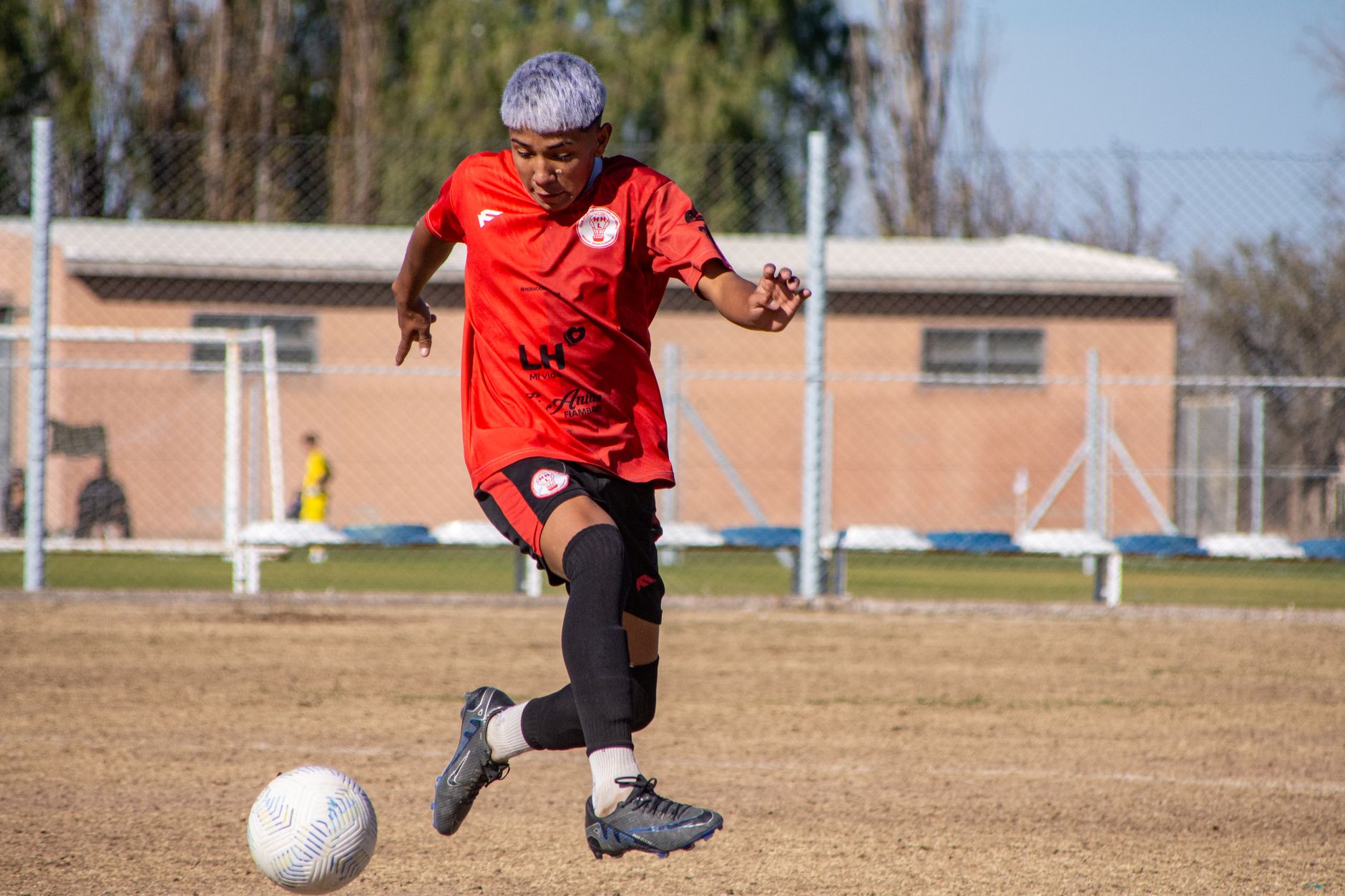
Photo by Franco Monsalvo on Pexels
Ball control means more than keeping the ball near your boots. In practical soccer terms, it includes receiving a pass, cushioning the ball, changing direction, dribbling through pressure, and preparing the next action. A player with excellent control does not simply stop the ball; they move it into useful space, often with the second touch already planned. That distinction separates a decorative street-football trick from a genuinely effective first touch.
When I first tried to “fix” my control, I made the classic rookie mistake: I performed flashy juggling for twenty minutes and then wondered why a hard pass still attacked my ankle like it had a personal grievance. The issue was not effort. It was transfer. Ball control drills must resemble match situations, with changing pace, imperfect passes, limited space, and a requirement to look up.
A practical seven-day benchmark can look like this:
- Day 1: Record 60 seconds of alternating-foot touches and note your total.
- Day 2: Complete 100 toe taps, then 50 inside-outside touches per foot.
- Day 3: Perform 100 wall passes using two-touch control.
- Day 4: Add a turn after every reception.
- Day 5: Dribble through five cones using both feet.
- Day 6: Repeat the drills while scanning over each shoulder.
- Day 7: Retest the original 60-second sequence and compare control errors.
The important measurement is not only speed. Count how many touches leave your comfortable playing distance, roughly one to two steps from your body in open space and less than one step in tight areas. The FIFA Training Centre regularly frames technical training around perception, decision-making, and execution, which is why a quiet drill should gradually become a thinking drill.
Want a broader match-preparation perspective from Pitch Notes? Learn more about how player technique connects with team tactics and tournament performance.
How does ball control handle fast passes and pressure?
Ball control handles fast passes best when the receiving player scans early, relaxes the controlling surface, and directs the first touch away from pressure. The safest technique is not always trapping the ball dead; it is cushioning or redirecting it into the next available lane. A good first touch should solve the next problem before the defender arrives.
Start with a wall, rebounder, or reliable partner positioned five to eight meters away. Pass with the inside of your foot, receive across your body, and use the second touch to move away at a 30- to 45-degree angle. Use your right foot for one set, your left foot for another, then alternate freely. If the ball arrives high, control it with the instep, thigh, or chest while keeping your knees soft and your body behind the ball. According to the Laws of the Game published by IFAB, players must understand their position and surroundings as part of lawful match play; technically, that same awareness helps you receive safely before contact arrives.
A useful pressure progression is:
- Stage 1: Receive and stop the pass with two touches.
- Stage 2: Receive across your body and pass forward.
- Stage 3: Receive while checking one shoulder.
- Stage 4: Add a passive defender.
- Stage 5: Add a live defender and a two-second decision limit.
Here is a less obvious correction: many players use too much force when controlling a fast pass because they tense the ankle. The foot becomes a wall, and the ball ricochets away. Instead, withdraw the foot slightly at impact, allowing the ball to lose energy. This is especially important on artificial turf, where the surface can make a low pass arrive faster than expected. In my own sessions, reducing the receiving-foot tension produced fewer uncontrolled rebounds than simply increasing repetition volume.
The UEFA Training Ground also highlights the value of receiving with an open body shape. Stand side-on rather than square whenever possible, because this allows you to see more of the field and play forward sooner. Watch Kevin De Bruyne, Luka Modrić, or Aitana Bonmatí and you will notice the same principle: the ball arrives, but their body is already prepared for the next action.
[Internal Link: first-touch soccer drills]
What about weak-foot control and tight spaces?
Weak-foot control improves when the weaker foot receives meaningful repetitions, not when it is used only for harmless warm-up touches. In tight spaces, the priority is close contact, body positioning, and quick escape touches. A realistic target is 150 to 250 weaker-foot touches per session, split between stationary work, wall passes, and directional dribbling.
Use a square measuring approximately three by three meters for beginners or two by two meters for advanced players. Perform inside touches, outside touches, sole rolls, V-pulls, and small drag-backs without allowing the ball to leave the square. Keep your head up every three to five touches, because a player who stares at the ball is technically practicing blindness with excellent footwear.
The following sequence develops useful control:
- Twenty sole rolls from right to left.
- Twenty V-pulls with the left foot.
- Twenty inside-outside touches on each foot.
- Ten 180-degree turns using the sole or inside of the foot.
- Thirty seconds of free dribbling with two scans per repetition.
- Ten explosive exits from the square.
Do not confuse tight-space control with constant trick performance. In a match, a simple sole roll may be more valuable than an elaborate elastico because it preserves possession and creates a passing lane. Players such as Andrés Iniesta and Xavi Hernández were admired not because every touch looked dramatic, but because their control consistently placed the ball where the next decision became easier.
A contrarian point is worth making: juggling may be less useful than wall passing for players who lose possession during ordinary receptions. Juggling improves coordination and contact confidence, but wall passing adds speed, angle, timing, and a return ball. After 30 minutes of juggling, you may feel like a technical genius; after 30 minutes of wall passes, the ball may reveal your actual weaknesses with the emotional warmth of an audit.
Pitch Notes can help you connect individual technique with match reading, player roles, and FIFA World Cup 2026 tactical trends.
Where does ball-control training fail?
Ball-control training fails when it rewards repetition without perception, uses only the dominant foot, ignores fatigue, or measures tricks instead of successful decisions. Drills performed in a predictable straight line can produce clean technique but poor match transfer. The solution is to vary speed, angle, pressure, body orientation, and the information a player must process before touching the ball.
Several common mistakes deserve specific attention:
- Practicing only on perfect grass when matches may occur on artificial turf or wet surfaces.
- Taking ten touches before passing when the match allows only one or two.
- Looking down continuously instead of scanning before the ball arrives.
- Using the right foot for 80 percent of repetitions.
- Treating “more difficult” as automatically “more useful.”
- Training until technique collapses and then calling the collapse character-building.
Fatigue is a particularly underestimated factor. A player may control perfectly during the first five minutes but lose touch quality after repeated sprints. Add a controlled fatigue block: complete a 10-meter acceleration, recover for 15 seconds, then receive a pass and play forward within two touches. Repeat eight to ten times. This tests the nervous system under conditions closer to a match, where tired legs and hurried decisions are annoyingly real.
Another information-gain insight is to track error type rather than merely error count. Record whether each mistake comes from poor body shape, excessive force, late scanning, weak-foot avoidance, or misjudged bounce. If eight of ten errors involve overhit touches, more juggling will not solve the problem; softer receiving mechanics and earlier preparation will. This simple classification can reduce wasted training time by identifying the actual bottleneck.
The American Soccer Analysis provides a useful reminder that actions should be evaluated in context, not as isolated highlights. A successful touch is one that supports possession, progression, or an immediate defensive response. Even FIFA World Cup 2026 contenders will value the boring correct pass more often than the spectacular failed trick, despite what highlight reels may suggest.

Photo by Kampus Production on Pexels
Should you try a 15-minute ball-control routine today?
Yes, a 15-minute ball-control routine is worthwhile if it includes both repetition and decision-making. Use three minutes for touches, four minutes for wall passes, four minutes for directional dribbling, and four minutes for pressure or scanning. Repeat the routine four to five times weekly, then increase difficulty rather than endlessly adding duration.
Try this compact session:
- Three minutes: toe taps, sole rolls, and inside-outside touches.
- Four minutes: wall passes, alternating one-touch and two-touch sequences.
- Four minutes: dribble around five cones, exiting at speed after the final cone.
- Two minutes: receive, scan, turn, and pass with the weaker foot.
- Two minutes: complete the same pattern after short accelerations.
Use a 1-to-5 scoring system after every session. Give yourself one point for a controlled first touch, one for using the weak foot, one for scanning before reception, one for moving into useful space, and one for making the correct next action. This produces a more honest score than counting 500 touches while standing in one spot. If your score remains below three after two weeks, simplify the drill and improve the movement pattern before adding a defender.
What should you expect after one week? Most beginners may notice better ball familiarity, fewer heavy touches, and more confidence receiving simple passes. After four to six weeks, consistent players can reasonably expect improved weak-foot comfort, faster directional changes, and better control while moving. The exact result depends on age, previous experience, surface, footwear, physical coordination, and whether a partner introduces pressure.
The FIFA World Cup 2026 will showcase elite control across Canada, Mexico, and the United States, but professional players are not using mysterious secret feet. They repeat fundamentals at higher speed, under greater pressure, with better scanning habits. That is encouraging news for ordinary players and mildly inconvenient for anyone hoping to purchase improvement in a suspiciously cheap online course.
Photo by cottonbro studio on Pexels
Want to turn the routine into a longer weekly plan? Review the practical training framework from Pitch Notes before your next session.
A simple weekly plan for measurable improvement
A weekly plan should alternate technical repetition, movement, and pressure instead of repeating one drill until your soul leaves your body. Monday can emphasize wall passes and first touch; Tuesday can focus on dribbling and turns; Wednesday should be lighter, using juggling and mobility; Thursday can add a passive defender; Friday can combine receiving with short sprints; Saturday can use small-sided play; and Sunday can be recovery or a short retest.
Track four numbers each week:
- Controlled wall passes completed in 60 seconds.
- Weak-foot receptions that remain within one meter.
- Successful exits from a two-by-two-meter square.
- First-touch errors during a fatigued drill.
The one-meter measure is particularly useful because it distinguishes control from mere contact. A ball that travels 1.5 meters may technically be touched successfully, yet a defender can reach it before you do. In contrast, a first touch within 30 to 60 centimeters usually keeps the ball available for a quick pass or change of direction, depending on space and pressure. These are practical training ranges, not universal laws, so adjust them for age and playing position.
For young players, prioritize fun, coordination, and both-foot exposure rather than punishing repetition. For adult beginners, consistency matters more than intensity. For attacking midfielders such as Jude Bellingham or wingers like Bukayo Saka, add receiving while turning and dribbling at speed. For defenders, emphasize receiving under pressure and playing forward safely. Position-specific ball control is more efficient because the “best” touch depends on the next task.
[Internal Link: position-specific soccer training]
The World Health Organization recommends regular physical activity for general health, but soccer training also demands sensible recovery. Stop if pain becomes sharp, persistent, or associated with swelling. A tired ankle is not a badge of honor; it is usually a request for rest, delivered with poor public-relations skills.
Frequently Asked Questions
Q: What is ball control in soccer?
A: Ball control is the ability to receive, protect, move, and direct the ball while preparing for the next action. It includes first touch, dribbling, turns, juggling, passing reception, and control under pressure. Effective control is not simply keeping the ball close; it means placing the ball into useful space so you can pass, shoot, or escape a defender. Players should practice both feet and several surfaces, including the inside, outside, instep, sole, thigh, and chest. A practical beginner test is completing 50 controlled wall passes without losing the ball beyond comfortable playing distance.
Q: How do I improve ball control quickly?
A: Improve ball control quickly by training for 10 to 15 focused minutes at least four days per week. Begin with toe taps and inside-outside touches, then complete wall passes, directional dribbling, and weak-foot receptions. Add scanning and a passive defender once the basic movement becomes consistent. Progress is faster when you count errors and identify their cause, such as excessive force or poor body shape. Do not spend every session juggling; combine coordination work with passes arriving at different speeds and angles.
Q: What is the difference between juggling and first-touch training?
A: Juggling develops coordination and familiarity with the ball, while first-touch training develops reception, direction, timing, and match transfer. Juggling is useful for warm-ups and improving contact confidence, but it rarely reproduces a fast pass from an opponent or teammate. Wall passing and partner drills are usually more relevant for players who lose possession during receptions. Use both methods, but give first-touch work greater priority if your main problem occurs when receiving under pressure.
Q: Why does my first touch keep bouncing away?
A: Your first touch usually bounces away because your receiving foot is too rigid, your body is poorly positioned, or you are watching the ball too late. Relax the ankle, withdraw the foot slightly at contact, and receive across your body when space allows. Start with slower passes five meters away, then increase speed and add angles. Record ten receptions from each side; if most errors travel too far forward, reduce force rather than adding more complicated dribbling tricks.
Q: How much does it cost to improve ball control?
A: Improving ball control can cost nothing if you have a ball, a wall, and a safe practice area. A basic setup may include a soccer ball costing approximately $20 to $40, cones costing $10 to $25, and optional rebound equipment costing $30 to $150. A coach or team session adds local training fees, which vary significantly by country and club. Equipment does not replace repetition, so begin with a standard ball and a measured 15-minute routine before buying expensive gadgets.
Q: Should I train ball control every day?
A: You can perform light ball touches daily, but intense ball-control sessions should usually be limited to four or five days per week. Short technical work can support coordination, while repeated sprinting, hard changes of direction, or long sessions may overload the ankles and calves. Schedule at least one recovery day and reduce volume when touch quality collapses. Young players and beginners should prioritize supervision, gradual progression, and pain-free movement rather than copying the workload of professional athletes.
Q: How can I improve ball control under pressure?
A: Improve control under pressure by adding a defender, a time limit, restricted space, and a required next action. Begin with a passive defender who closes slowly, then progress to live pressure after the receiver scans and chooses a direction. Use two-by-two-meter or three-by-three-meter areas to train close touches, but expand the space when practicing turns and forward passes. The goal is not merely to retain possession; it is to receive, protect, scan, and make the next decision before the defender can challenge.
The most useful takeaway is wonderfully unglamorous: train the first touch, use the weak foot, look up, and make the next action harder over time. Seven days can reveal improvement, while four to six weeks can build a dependable habit. Keep records, vary the pressure, and resist the temptation to judge your progress by how cinematic the drill looks.
Ready to follow more player-development and FIFA World Cup analysis from Pitch Notes? Start with the latest insights.